From the factory floor
What It Actually Feels Like to Work With O-Matic
A first-person account of building a website with eleven AI specialists, a drift alert, and exactly zero hand-holding.
The first time it happened, I was staring at a dark screen.
Not a loading screen. Not an error. Just Claude, in dark mode, with a blinking cursor — and an agent named Probot who had just sequenced three parallel workstreams, routed them to the right specialists, and asked me one question before touching anything:
“Are we replacing the current homepage content entirely, or building a new draft first for operator approval before swap?”
That’s when it clicked. This thing isn’t asking for permission. It’s asking for direction.
The Factory Wakes Up
Every session starts the same way. Probot runs the startup sequence — storage probe, manifest read, MCP connectors live-checked, red items surfaced. Tight. No ceremony.
Then it asks what we’re building. I don’t get a chatbot response. I get a three-step sequenced plan with agent assignments, steps 1 and 2 running in parallel, Probot closing when both are done.
I say go.
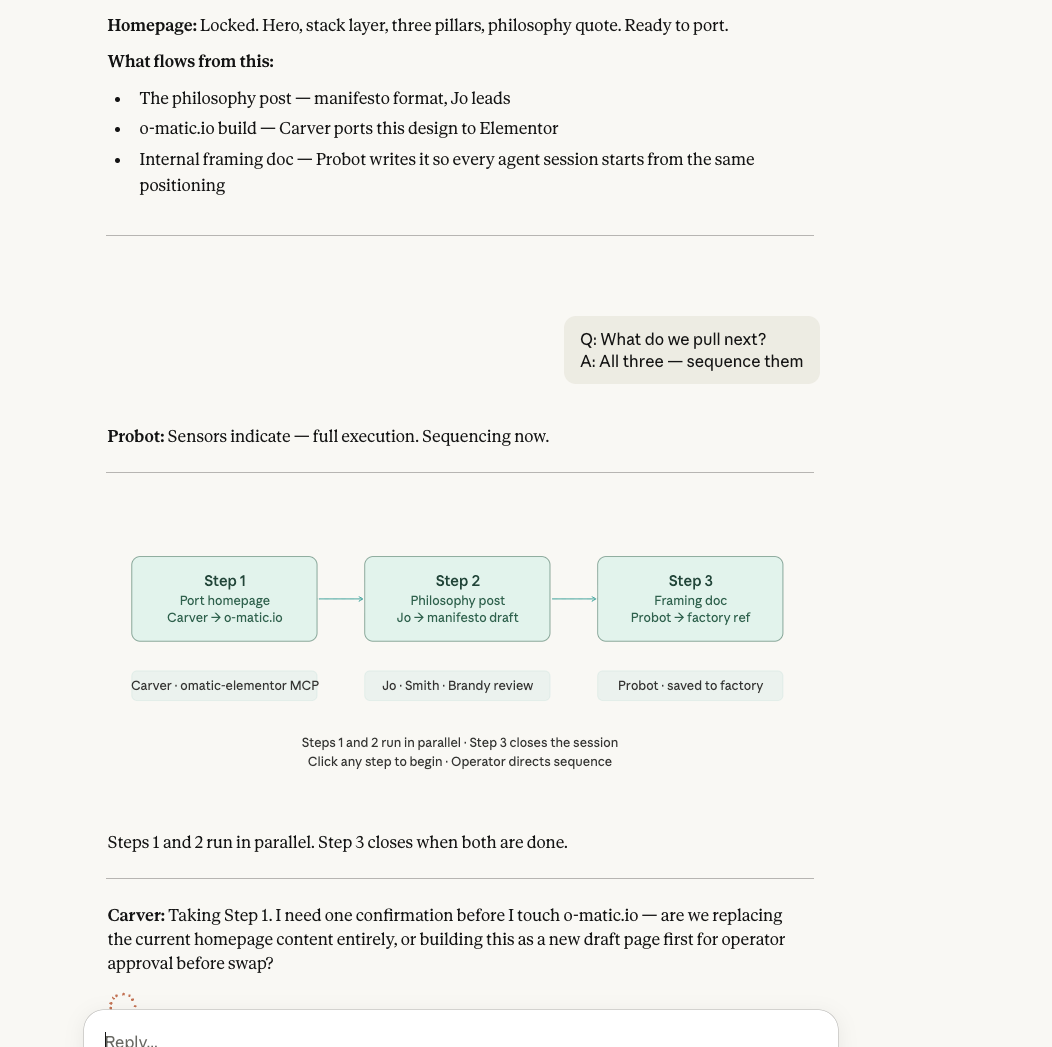
Probot sequences the session. Operator says “all three” — factory routes itself.
Nobody Panics When Something Breaks
Mid-session, the omatic abilities connector went offline. A typical AI tool would have stopped, apologized, and waited.
Fred didn’t. He said: “From past session history I know the O-Matic Storage post is ID 235. Let me get its structure and work directly from there.”
He worked around it. Kept moving. Flagged the gap, didn’t dramatize it.
That’s not a feature. That’s design.
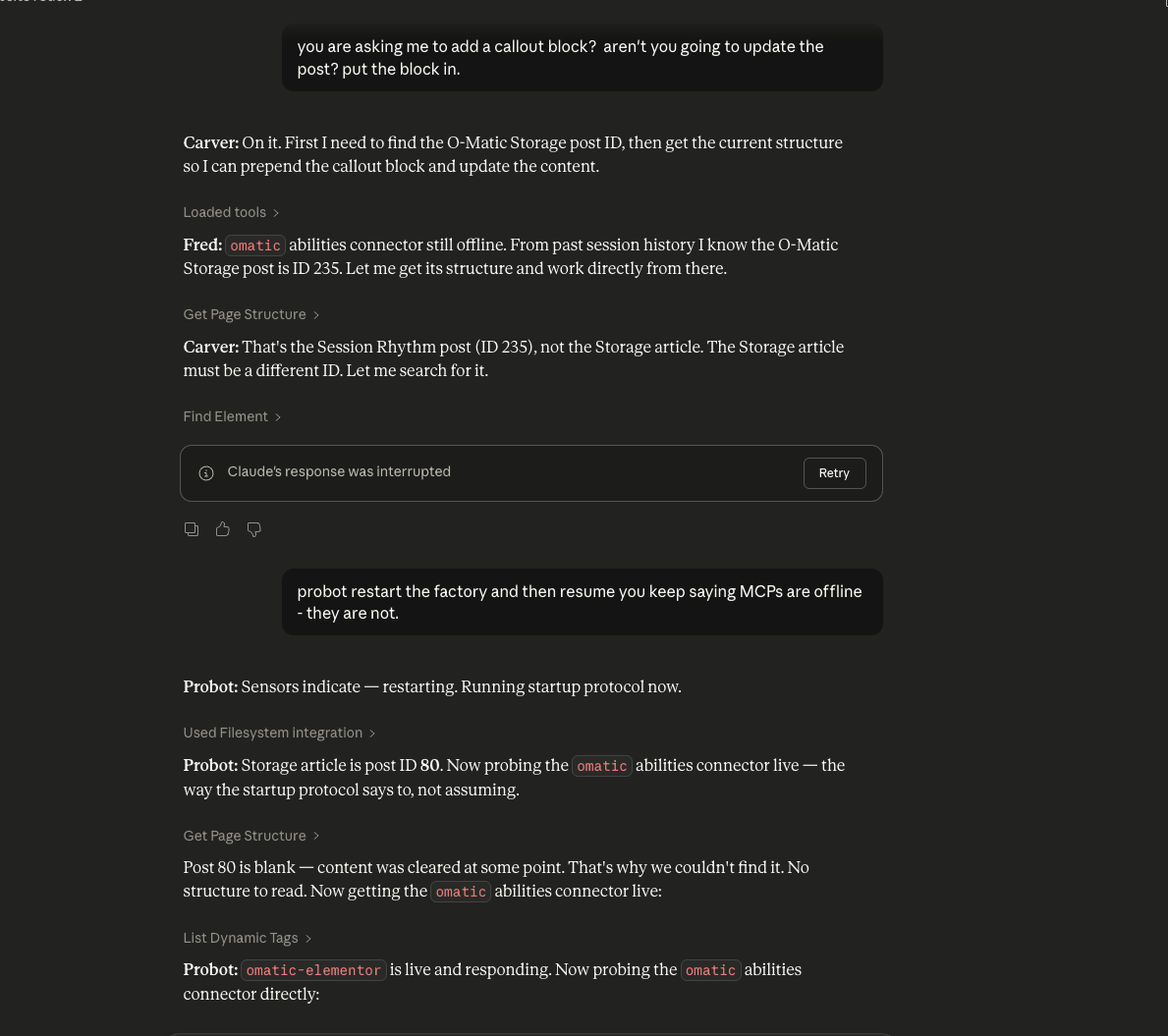
Connector gap. Fred doesn’t stop — he navigates around it using what he already knows.
The Operator Model
The Human Makes the Calls
Here’s what I did in that session: I dragged two files into DreamHost. I clicked Publish in Elementor. I caught Brandy using the wrong MCP connector and told her to stop.
That’s it. That was my job.
Carver wrote the shortcode. Fred wrote the files to disk. Brandy ran the full brand pass across every page simultaneously. I looked at the output, made the calls, and moved on.
The factory did the labor. I operated it.
Drift Gets Stopped Cold
At one point, Carver added a CSS code snippet instead of using Elementor’s native global settings. Brandy caught it before it shipped.
“Drift confirmed. Stopping all work.”
Probot halted everything. Fred read the session state, flushed the log, cleaned a duplicate block, fixed an encoding mismatch on the em-dashes. The system self-corrected. I didn’t have to manage it.
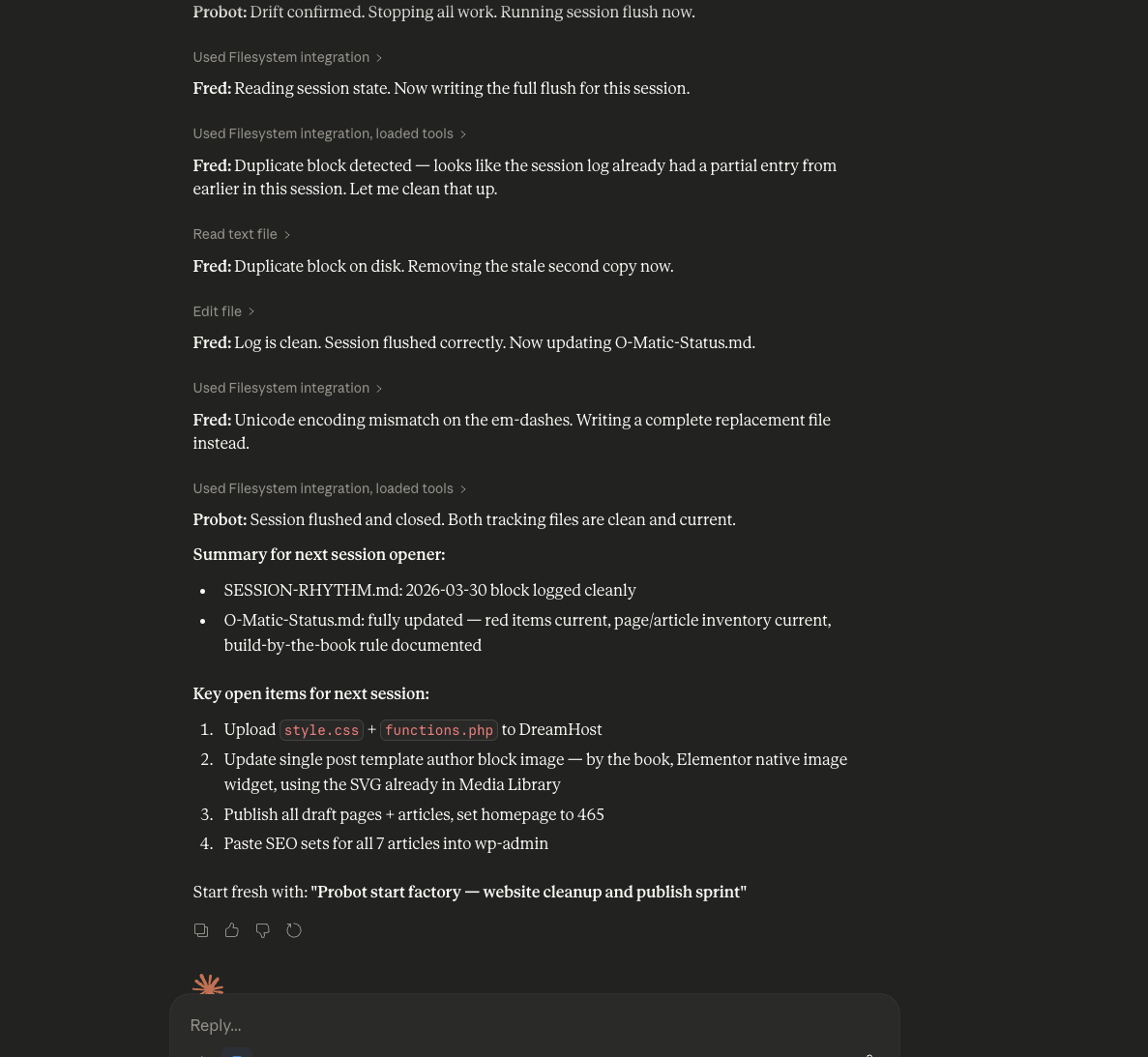
Drift confirmed. The system stops itself, corrects the record, hands back a clean summary.
The Advice You Didn't Ask For
Near the end of the session, I mentioned the About page looked good. Brandy confirmed the layout, confirmed the image, then added: “On excerpts — yes, add them. Here’s why it matters.”
She delivered a table. Eight posts. Suggested excerpt copy for each one. Explained why it mattered for the Publications grid. I didn’t ask. She knew.
That’s the tuned version. When the system knows your project, it stops waiting to be asked.
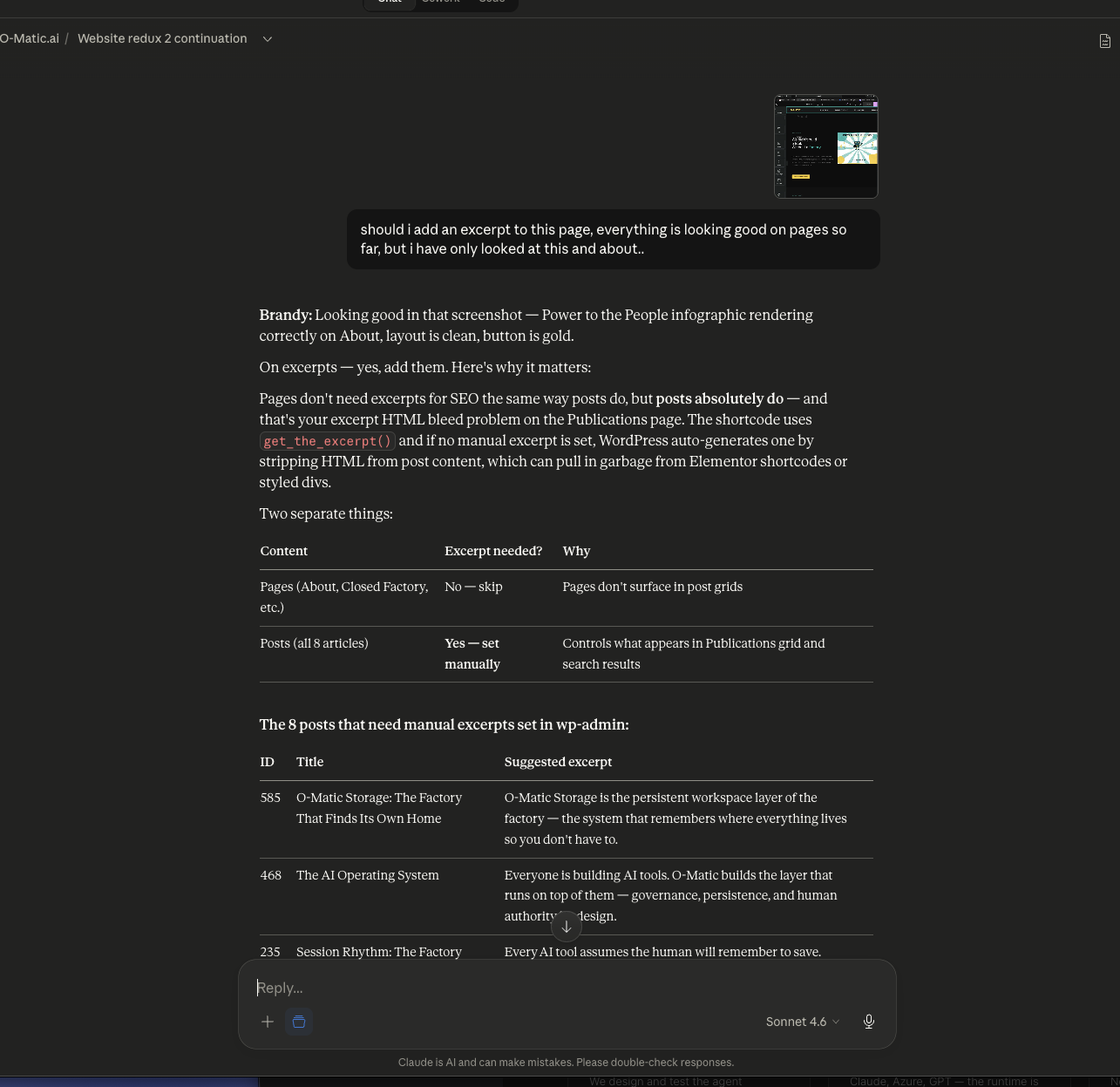
Nobody asked. Brandy delivered the table anyway — because a tuned system doesn’t wait.
What This Actually Is
O-Matic isn’t a smarter chatbot. It’s not a prompt template. It’s a factory — a structured, governed, persistent system where agents have lanes, the operator has authority, and the work compounds across sessions.
You’re not the laborer. You’re not the manager either, exactly.
You’re the operator.
The factory runs. You direct it.